
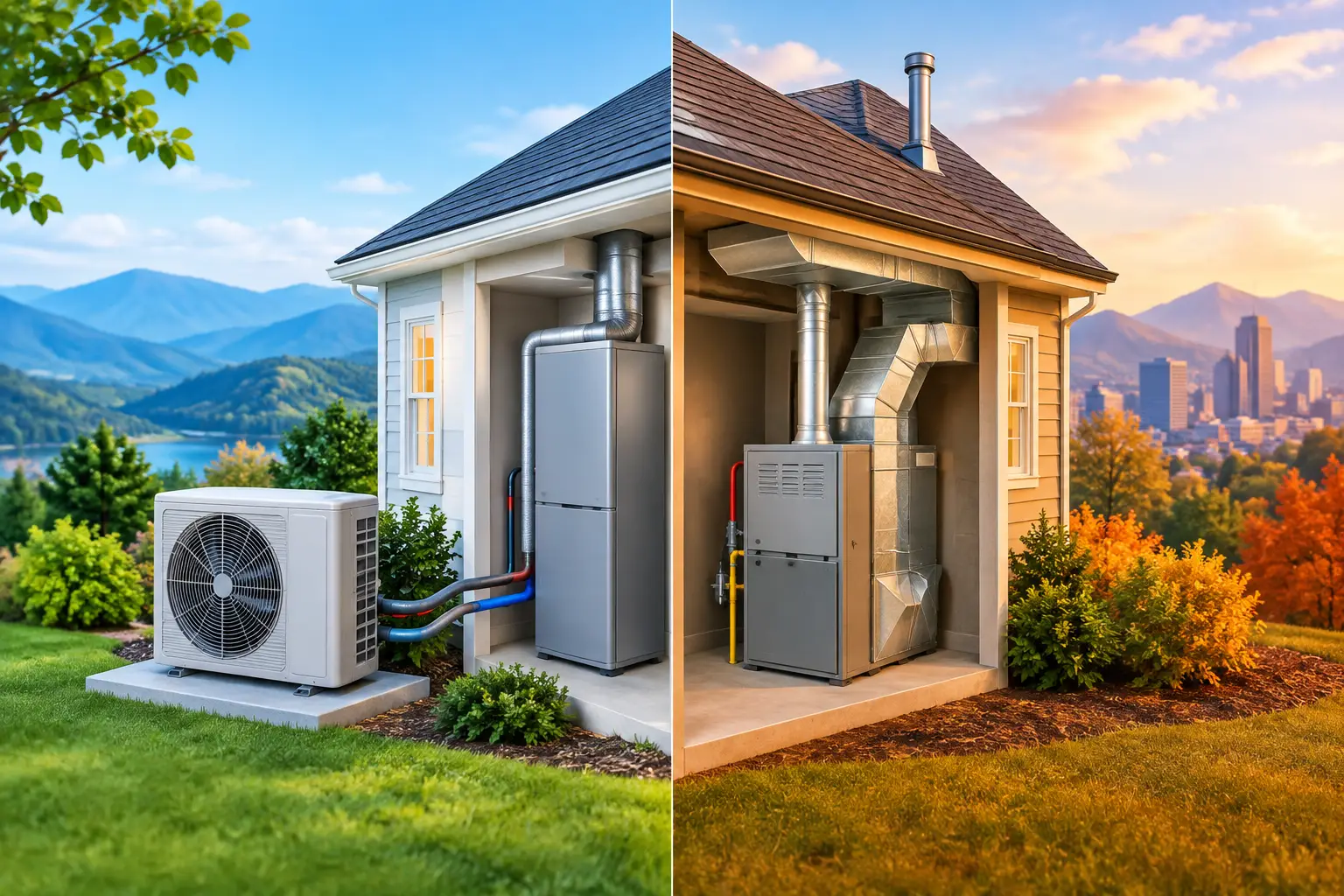
Heat Pump Versus Furnace for North Carolina
A heating replacement is not just a question of getting warm on the coldest night of the year. For Triangle-area property owners, it also affects summer cooling, indoor humidity, utility bills, repair risk, and the comfort of every room in the building. When weighing a heat pump versus furnace, the right choice depends on your home or business, your existing equipment, and how you want to manage energy costs over time.
North Carolina's relatively mild winters make heat pumps an especially strong option for many properties. But a furnace can still be the better fit in certain situations, particularly when natural gas is available and quick, high-output heat is a priority.
How Heat Pumps and Furnaces Produce Heat
A furnace creates heat by burning fuel, usually natural gas or propane, or by using electric resistance heating. A blower then moves that heated air through the ductwork. Gas furnaces are measured by AFUE, or Annual Fuel Utilization Efficiency. A 95% AFUE furnace converts about 95 cents of every fuel dollar into usable heat, with the remainder leaving through the venting system.
A heat pump works differently. Rather than creating heat from fuel, it transfers heat from outside air into the building. Even chilly outdoor air contains heat that a properly operating heat pump can move indoors. In summer, the process reverses, allowing the same system to provide air conditioning.
That two-in-one capability matters in Eastern North Carolina. A heat pump replaces both a separate air conditioner and a heating system, while a furnace still needs an air conditioner or other cooling equipment for the long cooling season.
Heat Pump Versus Furnace in North Carolina Weather
Raleigh, Cary, Apex, Durham, Wake Forest, Clayton, Wendell, Smithfield, and nearby communities typically see more moderate winter days than severe cold. A modern heat pump performs efficiently through much of that weather, delivering steady comfort without using combustion fuel.
During a hard freeze, a standard heat pump may need supplemental electric heat to maintain the indoor temperature. That backup heat is effective, but it costs more to operate than the heat pump itself. High-efficiency and cold-climate heat pumps can perform well at lower temperatures than older models, but equipment selection and proper sizing still matter.
A gas furnace does not lose heating capacity as outdoor temperatures drop. It can deliver very warm air quickly, which some homeowners prefer after a cold night or when doors are frequently opening and closing. For a commercial space with large entryways, high ceilings, or heavy traffic, that quick recovery can be valuable.
Neither system is automatically better for every building. A well-designed heat pump can be an excellent fit for a tightly sealed home with sound ductwork. A furnace may make more sense for a property already equipped with a dependable gas line, compatible venting, and a separate air conditioning system that still has useful life left.
Comfort Feels Different With Each System
Furnace heat generally feels hotter at the supply vents. The system cycles on, brings the temperature up quickly, and cycles off. That can be appealing if you like a fast blast of warmth, although oversized equipment may create noticeable temperature swings between cycles.
Heat pumps usually deliver air that feels less hot than furnace air, but they often run longer at lower output. The result can be more even room-to-room temperatures and fewer sharp swings. Variable-speed heat pumps are particularly effective at maintaining a steady indoor temperature because they can adjust output instead of operating only at full capacity.
Summer performance should carry real weight in the decision. A heat pump is also your air conditioner, and a properly sized system helps remove moisture while cooling. In our humid climate, better humidity control can make a home feel comfortable at a slightly higher thermostat setting and reduce the sticky, clammy feeling that often leads people to lower the temperature too far.
Compare Operating Costs, Not Just Purchase Price
The installed price is only one part of a heating decision. Heat pump installation may require electrical upgrades, a new indoor air handler, refrigerant-line work, duct modifications, or drainage improvements. Furnace replacement may involve gas piping, venting, combustion-air requirements, and coordination with an existing or replacement air conditioner.
Monthly cost depends on local electricity and gas rates, the equipment efficiency, insulation levels, thermostat habits, and the condition of the duct system. In much of North Carolina, a high-efficiency heat pump can provide lower heating costs than electric resistance heat and may compare favorably with propane. The calculation is closer when natural gas is available at a reasonable price.
A furnace can have a lower upfront replacement cost when the home already has a compatible gas furnace and central air system. However, replacing a furnace alone does not solve an aging air conditioner, poor humidity control, or a mismatched indoor and outdoor system. It is often wiser to consider the full HVAC picture before investing in only one piece of it.
Energy incentives, manufacturer offers, and available tax credits can also change the numbers. These programs have eligibility rules and may change over time, so confirm the current requirements before making a final decision.
When a Heat Pump Is Often the Better Choice
A heat pump is often a practical choice for homeowners who need both heating and cooling replacement, want efficient year-round operation, and do not have natural gas service. It is also a strong option for all-electric homes, renovated properties, and homeowners looking to reduce reliance on combustion equipment.
It may be especially appealing if your current system leaves rooms uneven, runs constantly in summer, or struggles with humidity. A variable-speed heat pump paired with properly designed ductwork can improve comfort in ways that a basic equipment swap may not.
For businesses, heat pumps can simplify equipment planning by providing heating and cooling from one system. This can work well for offices, retail spaces, and smaller commercial properties with predictable occupancy and moderate heating loads.
When a Furnace Can Be the Better Fit
A high-efficiency gas furnace deserves serious consideration when reliable natural gas is already available, winter heating demand is high, or the property needs rapid heat recovery. It can also be a sensible replacement when the air conditioner is newer and compatible with the new furnace.
Some property owners simply prefer the feel of warmer supply air. Others want the confidence of full heating output during the coldest weather without relying on electric auxiliary heat. Those are valid priorities, as long as the furnace is correctly sized and the installation meets all safety requirements.
Remember that most modern gas furnaces still require electricity to operate the blower, controls, and ignition. During a power outage, a furnace will not run without a properly designed backup-power solution.
Dual-Fuel Systems Offer a Middle Ground
For some North Carolina homes, the best answer is not choosing one system over the other. A dual-fuel system pairs a heat pump with a gas furnace. The heat pump handles efficient heating during mild weather, then the system switches to furnace heat when outdoor temperatures fall below a selected balance point.
This approach can offer strong year-round efficiency, dependable cold-weather performance, and central air conditioning. It generally costs more upfront, so it makes the most sense when both heating and cooling equipment are due for replacement or when long-term comfort is the priority.
Proper Sizing Protects Comfort and Equipment Life
The best equipment will not perform as expected if it is oversized, undersized, or connected to leaking ductwork. Oversized systems can short cycle, increasing wear and leaving humidity behind in summer. Undersized systems may run continuously and struggle during temperature extremes.
Before recommending equipment, a qualified HVAC professional should consider square footage, insulation, window exposure, ceiling height, duct condition, occupancy, and the building's actual heating and cooling load. A replacement should be based on more than the size of the old unit. Older equipment may have been incorrectly sized from the beginning.
Ongoing maintenance also protects the investment. Clean filters, clear outdoor equipment, inspected electrical connections, tested safety controls, and regular tune-ups help a heat pump or furnace operate safely and efficiently. Preventive service can catch small concerns before they become an after-hours breakdown or a major replacement expense.
If you are deciding between a heat pump, furnace, or dual-fuel setup, start with an honest evaluation of your property rather than a one-size-fits-all answer. American HVAC Solutions can help property owners across Eastern North Carolina weigh comfort needs, existing equipment, and budget so the next system feels like a reliable improvement every season.


Comments