

HVAC Efficiency Measures That Lower Energy Bills
A Raleigh home can feel cool at the thermostat and still leave the upstairs bedrooms stuffy. A Clayton storefront can have an air conditioner that runs all afternoon without keeping customers comfortable. In both cases, HVAC efficiency measures are about more than lowering a utility bill. They help your system move conditioned air where it belongs, control humidity, and avoid the strain that leads to surprise repairs.
Eastern North Carolina puts HVAC equipment to work. Long cooling seasons, sticky summer humidity, spring pollen, and occasional winter cold snaps can expose small problems quickly. The right improvements depend on your building, equipment age, insulation, ductwork, and comfort goals. Start with the measures that protect the system you already own, then make larger upgrades when the numbers and your long-term plans support them.
HVAC Efficiency Measures That Make the Biggest Difference
The most effective efficiency work is usually not a single product or a quick thermostat adjustment. It is a practical combination of maintenance, airflow correction, building improvements, and properly sized equipment. Each piece helps the next one perform better.
Keep up with professional maintenance
A neglected system has to work harder to deliver the same comfort. Dirt on an outdoor coil makes it harder for an air conditioner or heat pump to release heat. A dirty indoor coil can restrict airflow. Worn electrical components, loose connections, refrigerant issues, and drainage problems can all affect performance before they cause a complete breakdown.
Professional maintenance gives a technician the chance to clean key components, check operating pressures and temperatures, inspect safety controls, test electrical parts, and catch developing concerns early. For homeowners, a spring cooling visit and fall heating visit are a sensible rhythm. Businesses may need more frequent service depending on operating hours, occupancy, and equipment demands.
Maintenance also supports warranty requirements on many newer systems. Just as important, it gives you a clearer picture of whether your equipment is still operating reliably or nearing a point where replacement should be planned rather than rushed.
Change filters and protect airflow
A filter is inexpensive, but it has an outsized effect on airflow and indoor air quality. When it becomes clogged with dust, pet hair, pollen, or construction debris, your system may run longer while moving less air. That can raise energy use and place unnecessary stress on the blower motor and other components.
Check the filter monthly and replace it on the schedule recommended for your home or business. The right timing varies. A lightly occupied office may have different needs than a home with pets, allergies, or several occupants. It is also worth confirming that the filter is the correct size and rating for the equipment. A filter that is too restrictive can create airflow problems of its own.
Keep supply vents and return grilles open and clear. Closing vents in unused rooms may seem like an easy way to save energy, but most residential systems are not designed to operate with many vents shut. The result can be pressure imbalances, reduced airflow, and uneven temperatures.
Seal duct leaks and correct duct problems
Conditioned air is expensive to make. If leaky ducts send that air into an attic, crawl space, or wall cavity, comfort drops while operating costs rise. Duct leakage can also pull dusty, humid, or unconditioned air into the system, affecting both efficiency and indoor air quality.
Warning signs include rooms that are consistently warmer or cooler than the rest of the building, weak airflow at certain vents, excessive dust, and utility bills that seem high for the weather. A duct inspection can identify loose connections, damaged sections, poor insulation, or return-air problems that deserve attention.
Duct improvements are especially valuable when replacing older equipment. Installing a high-efficiency system on undersized or leaking ductwork can limit the benefit of the new unit. The equipment may be efficient on paper, but the building still will not receive the comfort you paid for.
Use thermostat settings with a purpose
A programmable or smart thermostat can reduce unnecessary run time when it is set up around your real schedule. For many households, allowing a slightly warmer temperature while everyone is away in summer and returning to a comfortable setting before arrival can reduce cooling demand. In winter, the same approach works in reverse.
The goal is moderation, not extreme setbacks. Raising or lowering the thermostat dramatically does not cool or heat the space faster. It may simply make the system run longer later. Heat pumps can require special programming because aggressive winter setbacks may trigger more expensive auxiliary heat. A technician can help you choose settings that fit your system.
For commercial properties, scheduling is just as important. Equipment should not be conditioning an empty building at full occupancy settings overnight, but it also should have adequate lead time before employees or customers arrive.
Improve the Building Around the HVAC System
Your HVAC system can only work with the building it serves. Air leaks, poor insulation, direct sun exposure, and unmanaged humidity force equipment to run longer than necessary.
Start with obvious air leaks around doors, windows, attic access points, plumbing penetrations, and exterior wall openings. Weatherstripping and caulk are simple improvements that can make rooms feel less drafty and reduce the load on heating and cooling equipment. Adequate attic insulation is another major factor, particularly in homes where summer attic temperatures become intense.
Window coverings, exterior shading, and ceiling fans can support comfort without replacing the HVAC system. Fans do not lower the room temperature, but they improve air movement and can make occupants feel more comfortable at a slightly higher thermostat setting in summer. Turn them off when rooms are empty because the benefit comes from airflow on people, not from cooling the space itself.
Humidity deserves special attention in North Carolina. High indoor humidity can make a home feel warm even when the thermostat is set low. It can also contribute to musty odors and moisture concerns. Properly operating air conditioning removes moisture as it cools, but oversized equipment, poor airflow, duct leaks, and building moisture sources can interfere with that process. In some properties, dedicated dehumidification is the better solution.
When Higher-Efficiency Equipment Is Worth Considering
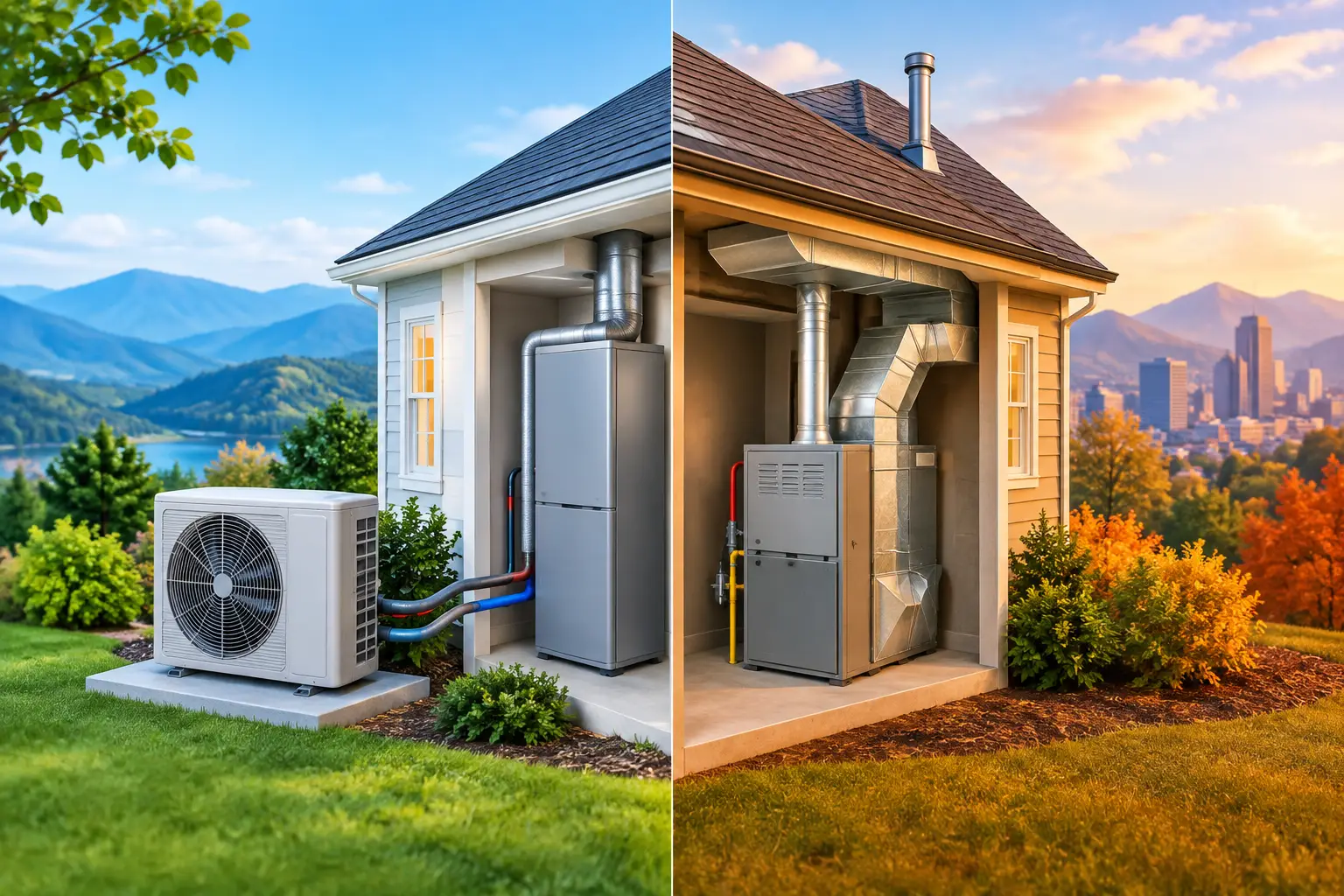
Repairs are often the right choice for a newer unit with a clear, affordable issue. Replacement becomes more reasonable when repair needs are recurring, parts are becoming difficult to find, energy bills remain high, or the system no longer maintains reliable comfort.
Modern air conditioners and heat pumps use efficiency ratings such as SEER2, while furnaces are commonly compared by AFUE ratings. Higher ratings can reduce operating costs, but the highest-rated unit is not automatically the best value. Equipment selection should account for the size and layout of the building, duct capacity, insulation, humidity needs, fuel type, and budget.
Correct sizing matters as much as the efficiency label. An oversized air conditioner may cool quickly but cycle off before it removes enough humidity. An undersized unit may run continuously during peak weather and still struggle to reach the thermostat setting. A professional load calculation helps avoid both problems by considering the building itself rather than relying only on the size of the old equipment.
Variable-speed systems can offer steadier temperatures, quieter operation, and improved humidity control. They can be an excellent fit for some homes and businesses, especially where comfort problems persist. However, they cost more upfront and should be installed carefully to deliver their expected benefits. A straightforward, properly installed single-stage or two-stage system may be the better budget-conscious choice in other situations.
A Practical Efficiency Plan for Homeowners and Businesses
Rather than chasing every possible upgrade at once, organize efficiency work around condition and urgency. Start by maintaining the equipment, replacing filters, and addressing obvious airflow restrictions. Then investigate duct leakage, insulation, humidity, and thermostat scheduling if comfort or utility costs remain a concern.
For a business, track utility use and note when comfort complaints occur. Patterns can reveal whether the issue is tied to occupancy, operating hours, sun exposure, a particular zone, or equipment cycling. For a homeowner, pay attention to hot rooms, noisy operation, frequent filter loading, water around the indoor unit, and changes in monthly energy costs. These details help a technician diagnose the cause rather than treat only the symptom.
American HVAC Solutions helps property owners across the Triangle and Eastern North Carolina make informed decisions about maintenance, repairs, and energy-efficient replacements. The goal is not to sell an upgrade that does not fit. It is to protect comfort, safety, and your budget with work that addresses the way your system and building actually operate.
If your HVAC system is running longer, costing more, or leaving certain rooms uncomfortable, do not wait for a complete failure to look into it. A timely inspection can turn a frustrating comfort problem into a manageable plan and help keep your property comfortable through the next season.


Comments